
If you’re serious about fitness and muscle development, understanding the difference between bulking and cutting is essential. These two phases form the foundation of most structured gym and bodybuilding programs.
In this article, we’ll break down bulking vs cutting, explain how each phase works physiologically, and help you decide which one fits your current fitness goal.
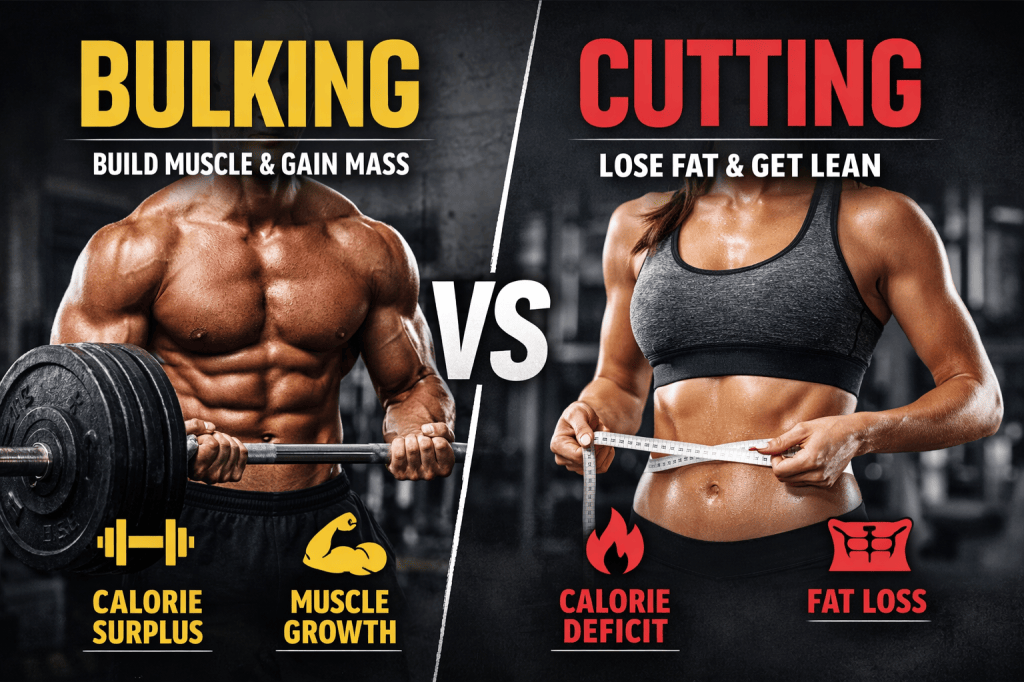
What Is Bulking in Fitness?
Bulking is a planned training and nutrition phase focused on maximizing muscle hypertrophy (muscle growth).
During a bulking phase, you intentionally consume a calorie surplus, meaning you eat more calories than your body burns daily. This surplus provides the energy required for:
Muscle protein synthesis Improved training performance Progressive overload in resistance training
Key Characteristics of Bulking
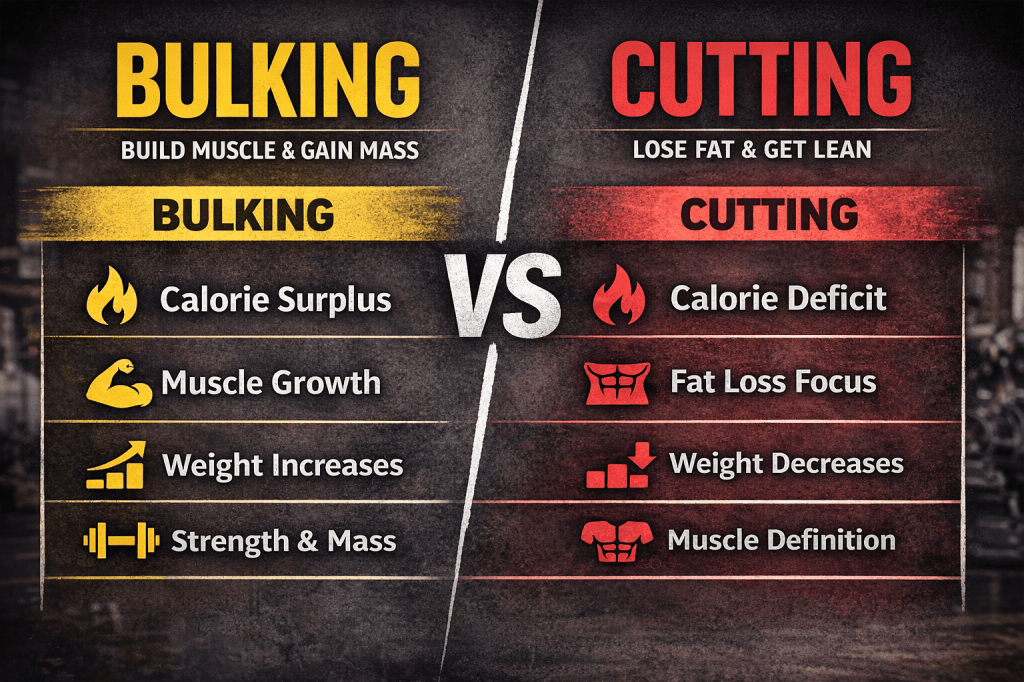
Calorie intake above maintenance High-protein diet Heavy resistance training Gradual weight gain
While muscle gain is the primary goal, some fat gain is unavoidable during a bulk.
Types of Bulking
Lean bulk: Small calorie surplus with minimal fat gain Dirty bulk: Large calorie surplus with rapid weight gain (not recommended)
What Is Cutting in Fitness?
Cutting is a phase designed to reduce body fat while preserving lean muscle mass.
This is achieved by maintaining a calorie deficit, where you consume fewer calories than your body burns, forcing it to use stored fat as energy.
Key Characteristics of Cutting
Calorie intake below maintenance High protein to prevent muscle loss Continued resistance training Increased focus on recovery
Cutting improves muscle definition, vascularity, and overall physique clarity.
Bulking vs Cutting: The Science Behind the Difference
The difference between bulking and cutting lies mainly in energy balance and hormonal response.
During a Bulk:
Increased insulin levels support muscle growth Testosterone and IGF-1 are optimized Strength and muscle mass increase
During a Cut:
Fat stores are used for energy Metabolic rate may slow if dieting is aggressive Muscle preservation becomes the main priority
Should You Bulk or Cut First?
Choosing between bulking and cutting depends on body composition, not just weight.
You should BULK if:
You have low body fat You struggle to gain muscle Your strength levels are low You look lean but lack muscle size
You should CUT if:
You carry excess body fat Your muscles are hidden You feel sluggish or heavy Health and fat loss are priorities
Body Recomposition (Beginners)
Beginners may benefit from body recomposition, where muscle gain and fat loss happen simultaneously through:
Proper protein intake Progressive resistance training Moderate calorie control
Nutrition Guidelines for Bulking and Cutting
Protein Intake:
1.6–2.2g per kg of body weight Essential in both phases
Carbohydrates:
Higher during bulking for training energy Controlled during cutting
Fats:
Support hormone production.
Should never be eliminated
Training Adjustments
Bulking Training
-Heavy compound lifts Progressive overload Higher training volume
Cutting Training
Maintain heavy lifts Reduce volume slightly Add cardio strategically
Common Mistakes to Avoid
Bulking without tracking calories.
Both phases are essential for long-term physique development. The key is choosing the right phase at the right time and staying consistent.
Cutting too aggressively.
Dropping protein intake Relying on cardio alone for fat loss.
Ignoring sleep and recovery
Final Verdict: Bulking or Cutting?
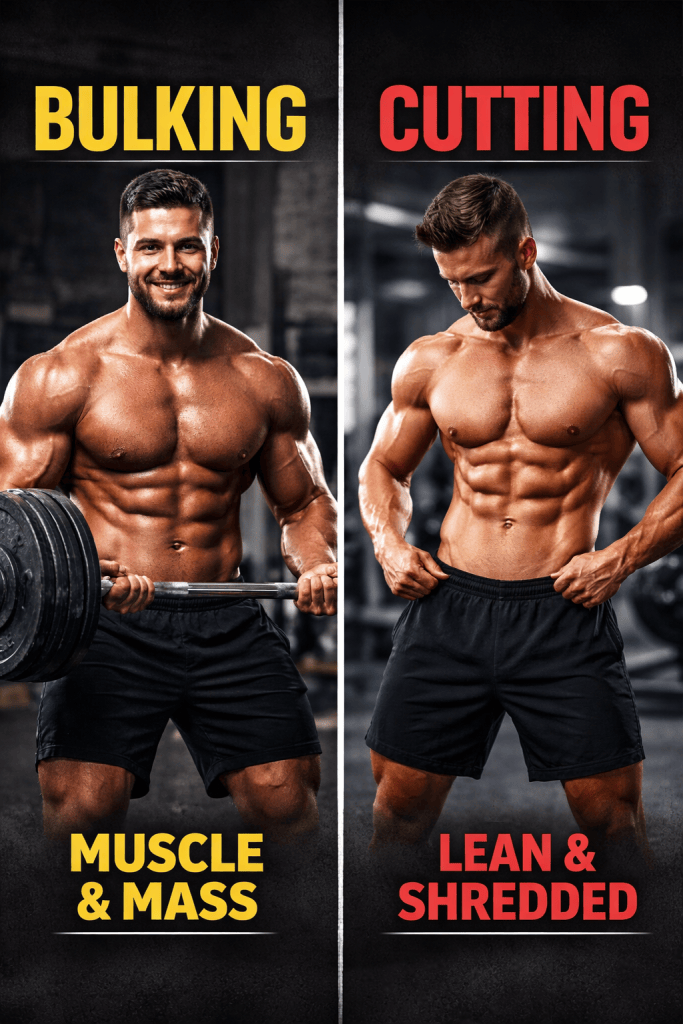
Bulking builds muscle.
Cutting reveals muscle.
Fitness is a long-term commitment. There are no shortcuts. Only smart training, proper nutrition, and discipline.
Frequently Asked Questions (FAQ)
Q1: Can I bulk and cut at the same time?
Answer: Yes! Beginners or people returning to training can achieve body recomposition, meaning they can gain muscle while losing fat. This requires a moderate calorie deficit, high protein intake, and consistent resistance training.
Q2: How long should a bulking phase last?
Answer: A typical bulking phase lasts 8–16 weeks, depending on your goals and body type. Longer bulks can be done in cycles, but it’s best to avoid extreme weight gain to minimize fat accumulation.
Q3: How long should a cutting phase last?
Answer: A cutting phase usually lasts 6–12 weeks, depending on your starting body fat and target goal. Cutting too quickly can lead to muscle loss, so a gradual approach is recommended.
Q4: Do I need supplements for bulking or cutting?
Answer: Supplements aren’t required, but protein powder, creatine, and multivitamins can help you meet your nutritional needs and support muscle recovery during both bulking and cutting.
Q5: Can I build muscle while cutting?
Answer: It’s challenging but possible for beginners or those returning from a break. Maintaining high protein intake, resistance training, and a small calorie deficit is key to preserving muscle while losing fat.
Q6: Which is better for beginners, bulking or cutting?
Answer: Beginners with low body fat should usually start with a lean bulk to gain muscle and strength. If a beginner has higher body fat, starting with a cut may be better to improve body composition and set a foundation for future bulking.
Q7: How do I know if I’m in a bulking or cutting phase?
Answer: Track your calorie intake, body weight, and progress:
Bulking: calories above maintenance, steady weight gain Cutting: calories below maintenance, fat loss while maintaining muscle
/bulking-vs-cutting
Want me to write articles or manage ads for you? Email me on fiifi120702@gmail.com

