
Metabolism Explained: How It Works and How to Boost It Naturally


Metabolism is often blamed for slow weight loss or praised for easy fat burning—but what is metabolism really, and how does it work?

In this article, we’ll explain what metabolism is, how it affects fat loss and muscle gain, and practical ways to support a healthy metabolic rate.


What Is Metabolism?

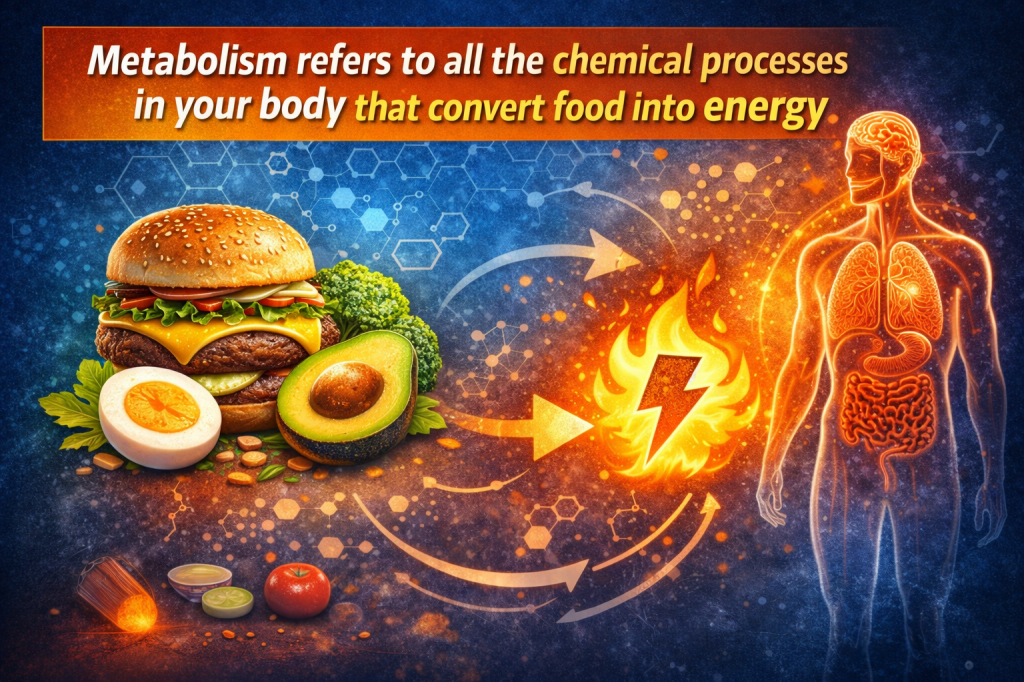
Metabolism refers to all the chemical processes in your body that convert food into energy.

This energy is used for:
	•	Breathing
	•	Digestion
	•	Blood circulation
	•	Muscle contraction
	•	Cell repair and growth

Even when you’re resting, your body is constantly burning calories to stay alive.


Basal Metabolic Rate (BMR)

Your Basal Metabolic Rate (BMR) is the number of calories your body burns at rest.

BMR accounts for about 60–70% of your daily calorie expenditure and is influenced by:
	•	Age
	•	Gender
	•	Height and weight
	•	Muscle mass
	•	Genetics

More muscle equals a higher BMR.


Fast vs Slow Metabolism

Fast Metabolism
	•	Burns calories quickly
	•	Easier fat loss
	•	Harder to gain weight

Slow Metabolism
	•	Burns calories slowly
	•	Easier weight gain
	•	Requires stricter calorie control

A slow metabolism does not mean weight loss is impossible, it just means strategy matters more.


How Metabolism Affects Weight Loss

Weight loss depends on calorie balance, not metabolism alone.

However, metabolism influences:
	•	How many calories you burn at rest
	•	How your body uses fat versus muscle
	•	Energy levels during workouts

Strength training and proper nutrition help protect metabolism during fat loss.


The Role of Muscle in Metabolism

Muscle tissue is metabolically active, meaning it burns more calories than fat—even at rest.

Benefits of building muscle include:
	•	Higher daily calorie burn
	•	Better insulin sensitivity
	•	Improved body composition

This is why resistance training is essential for long-term fat loss.


Does Metabolism Slow Down With Age?

Yes, but gradually.

Metabolism slows mainly due to:
	•	Loss of muscle mass
	•	Reduced physical activity
	•	Hormonal changes

This slowdown can be minimized with:
	•	Strength training
	•	Adequate protein intake
	•	Staying active


How to Boost Metabolism Naturally

Strength Train Regularly: Builds muscle and increases resting calorie burn.

Eat Enough Protein: Protein has a high thermic effect and supports muscle maintenance.

Stay Physically Active: Daily movement matters. Walking, gym training, and sports all help.

Get Enough Sleep: Poor sleep disrupts metabolism and affects hunger hormones.

Avoid Extreme Dieting: Severe calorie cuts slow metabolism and lead to muscle loss.


Common Metabolism Myths
	•	Some people can’t lose weight because of metabolism
	•	Eating small meals boosts metabolism
	•	Supplements can dramatically increase metabolism

The truth is that habits matter more than genetics.


Metabolism and Fitness Goals
	•	Bulking: Support metabolism with adequate calories and resistance training
	•	Cutting: Protect metabolism by lifting weights and eating enough protein
	•	Maintenance: Balance calories and activity levels


Final Thoughts

Metabolism is not your enemy.
It is a system you can support and improve with the right habits.

Build muscle.
Move consistently.
Eat smart.
Recover well.

That’s how you work with your metabolism, not against it.

Frequently Asked Questions (FAQ)

Q1: What exactly is metabolism?
Metabolism is the process by which your body converts food into energy. This energy is used to support vital functions such as breathing, digestion, circulation, and muscle movement.


Q2: Does a slow metabolism cause weight gain?
A slow metabolism can make weight management more challenging, but weight gain mainly depends on calorie intake and activity level. With proper nutrition and exercise, fat loss is still achievable.


Q3: Can you increase your metabolism naturally?
Yes. Building muscle through strength training, eating enough protein, staying active, and getting quality sleep can all help support a healthy metabolic rate.


Q4: Does metabolism slow down with age?
Metabolism tends to slow with age mainly due to muscle loss and reduced activity. Regular resistance training and adequate protein intake can significantly reduce this decline.


Q5: Do supplements boost metabolism?
Most supplements have minimal effect on metabolism. Consistent exercise, balanced nutrition, and proper recovery have a far greater impact than supplements.


Q6: Is metabolism the same for everyone?
No. Metabolism varies based on genetics, body composition, age, gender, and activity level. However, lifestyle habits play a major role in improving metabolic health.


Q7: How does muscle affect metabolism?
Muscle tissue burns more calories than fat at rest. Increasing muscle mass raises your basal metabolic rate, helping you burn more calories throughout the day.
Want me to write articles or manage ads for you? Email me on fiifi120702@gmail.com
/metabolism-explained
 Downtown Fitness